


How to Create a Luxury Living Room with Timeless Furniture


A beautifully designed living room should remain elegant long after the latest interior design trends have disappeared. For luxury homeowners, interior designers, and property developers, choosing the right luxury living room furniture is not simply about creating an impressive first impression. It is about building a sophisticated space through balanced proportions, enduring materials, thoughtful furniture arrangements, and exceptional craftsmanship.
Trendy furniture may attract attention today, but its visual appeal can quickly fade as design preferences change. Oversized novelty sofas, unusual silhouettes, and short-lived decorative trends may also limit the flexibility of a living room over time.
A timeless luxury living room takes a different approach. It combines architectural balance, comfortable seating, refined textures, and carefully selected statement pieces to create an interior that feels relevant for years.
Whether designing a private residence, a luxury apartment, a hotel lounge, or a high-end property showroom, understanding these principles helps create a living space that balances visual impact with long-term functionality.
1. The Investment Mindset: Why Timeless Furniture Outperforms Fast-Trend Pieces
Luxury furniture should be evaluated beyond its immediate visual appeal. Its proportions, materials, construction quality, and ability to adapt to changing interiors all contribute to its long-term value.
For high-end residential projects and hospitality developments, timeless furniture offers a more flexible design foundation than pieces built around short-lived trends.
1.1 Choose Classic Silhouettes Over Short-Lived Trends
Furniture trends often change faster than the architecture of a home.
A sculptural sofa with an exaggerated shape or an unusual decorative finish may look attractive in a showroom. However, it can become difficult to integrate into a redesigned interior when color preferences, wall finishes, or decorative styles change.
Timeless living room furniture typically features more balanced and adaptable silhouettes.
Consider the following examples:
- Classic Three-Seater Sofas: Clean proportions and balanced backrests suit traditional and contemporary interiors.
- Tailored Sectional Sofas: Flexible seating arrangements work well in spacious living rooms.
- Track-Arm Sofas: Defined lines create a structured and understated appearance.
- Tuxedo Sofas: A continuous backrest and arms provide a distinctive architectural profile.
- Classic Lounge Chairs: Well-proportioned accent seating adds character without overwhelming the room.
These designs can work with different decorative styles through changes in upholstery, cushions, rugs, and accessories.
The goal is not to avoid contemporary furniture. It is to select designs with enough visual balance to remain relevant as the surrounding interior evolves.
1.2 Prioritize Quality Construction and Durable Materials
A luxury sofa should offer more than an attractive exterior. Its internal construction determines comfort, stability, and long-term usability.
When evaluating premium living room furniture, buyers and designers should consider:
| Furniture Element | What to Look For | Long-Term Benefit |
|---|---|---|
| Frame | Solid hardwood or properly engineered structural materials | Structural stability |
| Cushioning | High-quality foam, suitable fiber, or layered cushioning | Consistent seating comfort |
| Upholstery | Durable leather, wool, linen blends, or performance fabrics | Better wear resistance |
| Suspension | Well-designed springs or webbing systems | Support and comfort |
| Stitching | Consistent seams and reinforced stress points | Better construction quality |
| Finishing | Carefully finished edges and joints | Refined appearance |
The right material depends on the intended use, maintenance expectations, and overall design concept.
For example, a private formal living room may prioritize natural leather and delicate fabric textures. A hotel lounge may require more durable upholstery that withstands frequent use and regular cleaning.
1.3 Think About Adaptability, Not Just Immediate Appearance
A timeless living room should be able to accommodate changes without requiring every major furniture piece to be replaced.
Neutral upholstery, balanced silhouettes, and versatile finishes make this easier.
A classic cream sofa, for example, can work with warm wood furniture, dark stone surfaces, brushed brass accents, or more contemporary decorative accessories.
Instead of replacing the main furniture whenever a new trend appears, designers can update smaller elements such as:
- Decorative cushions
- Area rugs
- Curtains
- Table accessories
- Artwork
- Accent lighting
This approach allows the interior to evolve while maintaining its original design foundation.
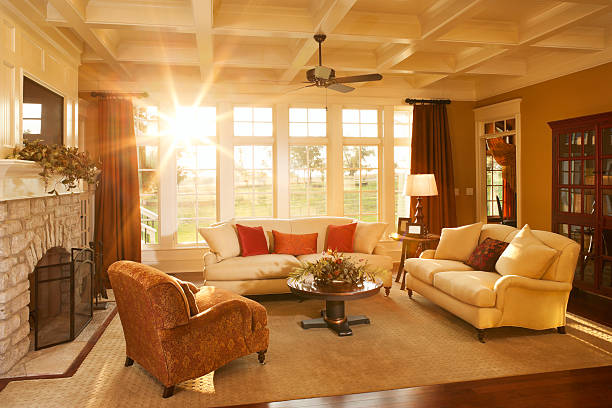
2. Mastering Architectural Proportions and Symmetrical Conversation Layouts
The visual quality of a luxury living room depends heavily on how furniture relates to the architecture.
Even the most expensive sofa can look out of place if it is too large for the room or positioned without considering circulation and spatial balance.
A successful layout begins with architectural proportions.
2.1 Use Architectural Features as the Main Design Axis
Before selecting furniture, identify the dominant architectural features of the living room.
These may include:
- A central fireplace
- Floor-to-ceiling windows
- A feature wall
- A prominent artwork installation
- An architectural column
- A panoramic city or garden view
These elements can serve as visual anchors for the furniture arrangement.
For example, in a living room with a central fireplace, two sofas facing each other can create a balanced conversation area.
In a room with large windows, a sofa arrangement may be oriented toward the view while maintaining clear access to natural light.
The objective is to make furniture feel integrated into the architecture rather than simply placed inside an empty room.
2.2 Create Symmetrical Conversation Areas
Symmetrical furniture arrangements are commonly used in formal luxury living rooms because they establish visual order.
A traditional arrangement may include:
- Two facing sofas
- A central coffee table
- Matching or coordinated side tables
- A pair of accent chairs
- Symmetrical floor or table lighting
This configuration encourages conversation and creates a clear focal point.
However, symmetry does not require every furniture item to be identical. Designers can use different accent chairs or decorative objects while maintaining similar visual weight on both sides.
For more relaxed interiors, an asymmetrical arrangement may work better. The key is to maintain balance through furniture scale, color distribution, and negative space.
2.3 Maintain Appropriate Furniture Spacing
Furniture placement should support both visual balance and everyday movement.
The following measurements provide useful preliminary planning references:
| Layout Element | Suggested Planning Range |
|---|---|
| Main walking pathways | Approximately 75–90 cm |
| Sofa-to-coffee-table clearance | Approximately 35–45 cm |
| Coffee table height | Similar to or slightly lower than sofa seat height |
| Main conversation seating distance | Approximately 1.8–3 m, depending on the layout |
| Side table height | Near the sofa armrest height |
These are general design guidelines rather than fixed requirements. The final dimensions should account for furniture depth, room size, user comfort, and accessibility.
A well-planned layout should provide enough space for movement without making the furniture arrangement feel disconnected.
2.4 Use Rugs to Define the Living Room Zone
Area rugs help visually connect furniture pieces and define different functional zones.
In a spacious luxury living room, a large rug can anchor the main seating arrangement and create a sense of cohesion.
For a more polished appearance, the front legs of the main sofas and accent chairs can sit on the rug. In larger rooms, placing all seating legs on the rug may create a more unified arrangement.
The rug should complement the sofa upholstery, flooring, and surrounding materials without competing with the main furniture.
3. Layering Textures for Rich Visual Depth Without Visual Clutter
Luxury interiors rarely rely on a single material or finish. Their visual richness often comes from combining different textures within a coordinated color palette.
The challenge is to create depth without making the living room feel crowded or visually inconsistent.
3.1 Build a Consistent Base Color Palette
A timeless luxury living room often starts with a restrained color foundation.
Common options include:
- Warm ivory and cream
- Beige and taupe
- Soft gray and charcoal
- Warm brown and cognac
- Muted olive and natural stone tones
These colors provide a flexible backdrop for premium furniture and decorative materials.
For example, a cream upholstered sofa can be paired with a warm beige rug, walnut furniture, and brushed brass details.
Alternatively, a charcoal sofa can create a more dramatic foundation when combined with natural stone, dark wood, and subtle metallic accents.
The important point is to establish a consistent visual direction before introducing multiple materials.
3.2 Combine Leather, Bouclé, Tweed, and Natural Fabrics
Different upholstery materials create different visual and tactile experiences.
| Material | Visual Character | Suitable Furniture Applications |
|---|---|---|
| Genuine Leather | Refined, rich, and naturally textured | Sofas, lounge chairs |
| Bouclé | Soft, dimensional, and tactile | Accent chairs, contemporary sofas |
| Tweed | Structured and textured | Classic sofas, occasional chairs |
| Linen Blends | Relaxed and natural | Sofas, cushions |
| Velvet | Smooth and visually rich | Statement seating, decorative accents |
| Performance Fabrics | Versatile and practical | Family seating, hospitality furniture |
A successful combination often uses one dominant upholstery material and one or two complementary textures.
For example, a tailored leather sofa can be paired with bouclé accent chairs. A tweed cushion or soft wool throw can add another layer without overwhelming the overall composition.
Material selection should also reflect the intended usage. High-traffic hospitality environments may require upholstery with suitable abrasion resistance, cleanability, and colorfastness.
3.3 Introduce Natural Stone and Brushed Metal Accents
Natural stone and metallic finishes add visual contrast to upholstered furniture.
A marble or travertine coffee table can provide a solid visual anchor in a room dominated by soft textiles.
Brushed brass, bronze, or stainless steel details can introduce subtle highlights through:
- Coffee table frames
- Side table legs
- Floor lamp structures
- Decorative hardware
- Furniture base details
For a more timeless result, metallic finishes should complement rather than dominate the room.
Brushed finishes generally create a more understated appearance than highly reflective decorative surfaces.
3.4 Balance Texture and Visual Simplicity
Using too many materials can weaken the overall design.
A more effective approach is to establish a hierarchy:
- Select the main sofa upholstery as the dominant texture.
- Introduce one contrasting material through accent chairs.
- Add natural stone or wood through coffee tables.
- Use metal details for subtle visual highlights.
- Complete the arrangement with carefully selected soft accessories.
This creates a layered interior while preserving a coherent visual identity.
4. Balancing Scale: Pairing Substantial Seating with Delicate Accent Tables
Furniture scale plays an important role in making a luxury living room feel comfortable and visually balanced.
Large sofas often provide the foundation of a spacious living area. However, placing too many bulky pieces together can make the room feel heavy.
A more effective design combines substantial seating with lighter accent furniture.
4.1 Select a Sofa That Matches the Room’s Architectural Scale
A sofa should relate to the overall dimensions of the room.
An oversized sectional may suit a large open-plan residence, but it can overwhelm a smaller luxury apartment.
Similarly, a compact two-seater may look insignificant in a grand living room with high ceilings and large windows.
When selecting a sofa, consider:
- Overall width and depth
- Backrest height
- Armrest proportions
- Seat height and depth
- Distance from surrounding walls
- Relationship with coffee tables and accent chairs
A well-proportioned sofa should create a comfortable seating area without obstructing the room’s circulation.
4.2 Pair Large Sofas with Visually Lighter Tables
The contrast between substantial upholstered seating and delicate accent tables can improve the visual balance of a room.
For example, a large three-seater sofa can be paired with:
- A slim metal-frame side table
- A small round marble accent table
- A glass coffee table
- A sculptural pedestal table
- A narrow console table
These pieces introduce functional surfaces without adding unnecessary visual weight.
Designers can also combine materials strategically. A solid stone tabletop with a slender metal base provides a balance between material richness and visual lightness.
4.3 Use Lighting to Add Vertical Balance
Lighting helps balance the horizontal mass of sofas, coffee tables, and cabinets.
A slender floor lamp beside a substantial sofa introduces vertical lines and improves the overall composition.
Pendant lighting can also establish a focal point above a central coffee table, while table lamps create softer illumination around the seating area.
For a timeless luxury interior, lighting should complement the furniture rather than compete with it.
4.4 Avoid Overcrowding the Seating Arrangement
More furniture does not necessarily create a more luxurious room.
Leaving negative space around the main seating arrangement allows each piece to maintain its visual presence.
A carefully selected sofa, a well-proportioned coffee table, two accent chairs, and a few coordinated side tables may create a stronger design statement than filling the entire room with furniture.
This is particularly important in high-end residential projects, where architectural details and material finishes should remain visible.
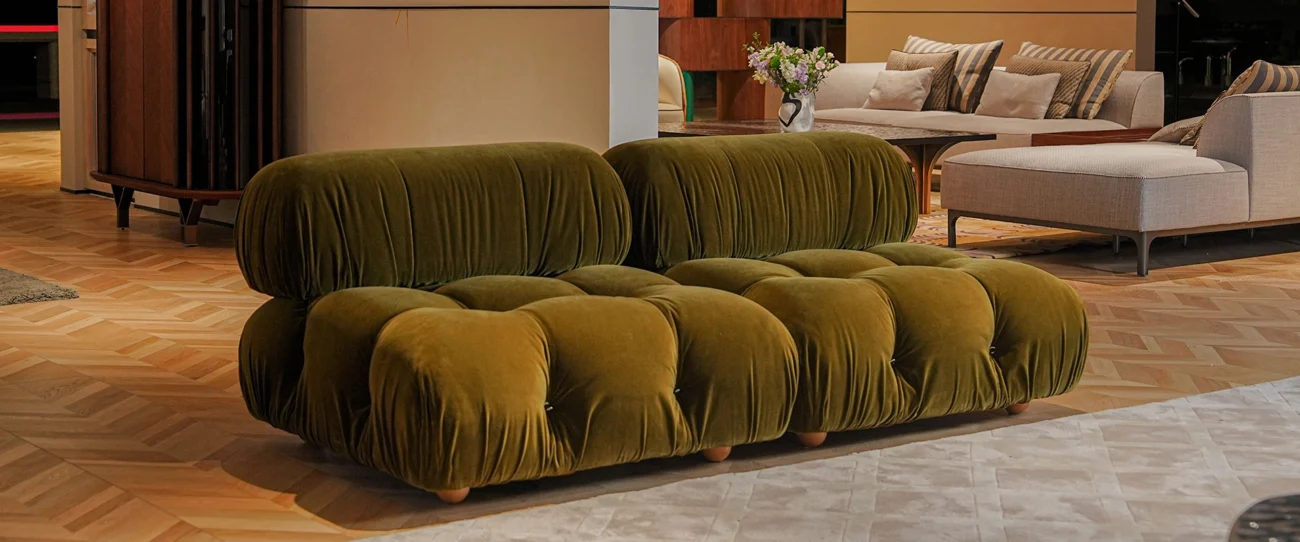
5. Bespoke Finishing Touches for High-End Hospitality and Residential Spaces
For luxury residential developments and hospitality projects, standard furniture dimensions and finishes may not satisfy every design requirement.
Bespoke living room furniture allows designers and developers to coordinate furniture with the architecture, brand identity, and functional needs of a specific project.
5.1 Custom Sofa Dimensions and Configurations
Custom sofa manufacturing provides greater flexibility in furniture proportions.
Depending on the project, buyers may specify:
- Overall sofa width and depth
- Seat height and cushion thickness
- Armrest dimensions
- Backrest height
- Modular sectional configurations
- Chaise lounge orientation
- Leg style and finishing
For example, a hotel lounge may require a large modular sofa arrangement that accommodates different guest groups.
A private residence may need a custom sectional that follows the dimensions of a particular architectural layout.
Customization helps achieve a more consistent relationship between furniture and interior space.
5.2 Custom Upholstery and Material Selection
Upholstery has a significant influence on the final appearance of luxury furniture.
Custom furniture projects may require specific fabric colors, leather grades, textures, stitching patterns, and decorative details.
For hospitality projects, material selection should also consider maintenance and usage intensity.
Important considerations include:
- Fabric composition
- Abrasion resistance
- Colorfastness
- Cleaning requirements
- Leather surface characteristics
- Fire performance requirements where applicable
For high-end residential projects, designers may prioritize tactile comfort, natural materials, and distinctive finishes.
A coordinated upholstery specification across sofas, lounge chairs, and accent seating helps establish a consistent interior identity.
5.3 Custom Furniture for Hotels and Hospitality Projects
Luxury hotels, private clubs, serviced apartments, and hospitality developments often require furniture that balances aesthetics with operational performance.
Furniture in these environments may experience frequent use, repeated cleaning, and different occupancy patterns.
A successful hospitality furniture specification should address:
- Consistent dimensions across multiple units
- Durable internal construction
- Suitable commercial upholstery
- Coordinated finishes
- Easy maintenance
- Project-specific safety requirements
- Production and delivery schedules
Custom manufacturing also helps hospitality brands maintain consistent furniture styles across different areas of a property.
5.4 Coordinate Furniture Finishes Across the Entire Project
A luxury living room should feel like a complete composition rather than a collection of unrelated furniture items.
For large residential and commercial projects, designers should coordinate:
- Sofa and accent chair upholstery
- Wood colors and grain patterns
- Metal finishes
- Coffee table materials
- Cushion fabrics
- Decorative stitching
- Furniture leg designs
Creating a consistent finish schedule before mass production can reduce visual differences between individual furniture pieces.
It also helps manufacturers maintain better control over material sourcing, sampling, and production quality.
5.5 Evaluate Craftsmanship Before Approving Mass Production
Before placing a large custom furniture order, buyers should review samples and prototypes.
Important quality checks include:
- Frame construction and joint stability
- Cushion comfort and support
- Upholstery alignment
- Stitching consistency
- Surface finishing
- Dimensional accuracy
- Color and material consistency
For hospitality and multi-unit residential projects, approving a reference sample is particularly useful because it establishes a standard for subsequent production.
Conclusion: Timeless Luxury Living Rooms Begin with Thoughtful Furniture Selection
Creating a timeless luxury living room is not about following every new furniture trend. It is about understanding how furniture proportions, architectural layouts, material combinations, and craftsmanship work together.
Classic sofa silhouettes provide a flexible foundation. Balanced furniture arrangements improve spatial harmony. Layered textures introduce depth, while carefully selected accent tables and lighting prevent large seating pieces from overwhelming the room.
For high-end residential and hospitality projects, bespoke furniture adds another level of design flexibility. Custom dimensions, upholstery, finishes, and construction details help align furniture with the specific requirements of each space.
Ultimately, the best luxury living room furniture combines enduring design, practical comfort, quality materials, and reliable craftsmanship. By prioritizing these principles, designers and project developers can create interiors that remain elegant, functional, and visually relevant over time.
Elefante provides customized luxury furniture solutions for residential and hospitality projects. By coordinating furniture dimensions, upholstery materials, structural details, and finishing options, project buyers can develop furniture collections that complement their design concepts and long-term requirements.


